What is a gap year?
A gap year isn’t just time off – it’s time well spent.
At its simplest, it’s time taken out of education or work with a purpose. That could mean travelling, gaining new skills, building experience or figuring out what’s next.
And despite the name, it doesn’t have to be a full year. It could be a few weeks, a few months, or longer – what matters is how you use it.
For some, it’s about seeing the world. For others, it’s about building confidence, gaining qualifications or trying something completely new. The best gap years combine all of it.
If the idea of “just travelling” feels a bit aimless, structured programmes offer a way to make your time count – giving you direction, support and experiences that actually add something to your future.

When should I take a gap year?
There’s no perfect time – only what works for you.
Most people take a gap year:
After school, before university
After university, before starting work
During summer breaks (“mini gaps”)
Between jobs or career changes
While pre-university is the most common, it’s not your only option. More and more people are choosing to take time out later – whether that’s to reset, retrain or explore something new.
What matters isn’t when you go, but why.

Should I take a pre-university gap year?
For many, this is the ideal time.
A well-planned gap year can help you build independence, confidence and clarity before starting university. Many students return more focused, motivated and ready for what’s next.
That said, some universities prefer students to go straight into study – so it’s always worth checking your course requirements first.
Should I take a gap year during university?
Taking a full year out mid-degree can be disruptive – both academically and socially.
A more popular option is a “mini gap” during summer holidays. This allows you to gain experience, travel and build your CV without interrupting your studies.
It’s also a great way to test new interests without committing to a full year.
Should I take a gap year after university?
This is one of the most valuable times to go.
With no lectures or deadlines, you have complete freedom – and a chance to gain experience that sets you apart before entering the job market.
Whether it’s internships, training or meaningful travel, a post-university gap year can give you both direction and a competitive edge.

Why take a gap year?
Everyone’s reason is different – but most come down to a few key things:
Figuring out what you want to do next
Taking a break after studying
Building your CV with real experience
Trying something completely new
Travelling with purpose
Meeting new people and seeing the world
Pushing yourself outside your comfort zone
At its best, a gap year is about growth – not just escape.
Benefits of taking a gap year?
Gaining a different perspective
New places, people and challenges can completely shift how you see the world – and your place in it.
Taking a break that actually resets you
Stepping away from routine gives you space to think, reset and come back with more energy and focus.
Real experience that matters
From conservation to leadership training, structured programs give you practical experience employers actually value.
Personal growth
Confidence, independence, resilience – these are the things people take away from a gap year, often more than anything else.

How to structure a gap year?
Once you’ve decided to take one, the next step is making it count.
What do you want to do?
Start with your interests – but don’t be afraid to try something new.
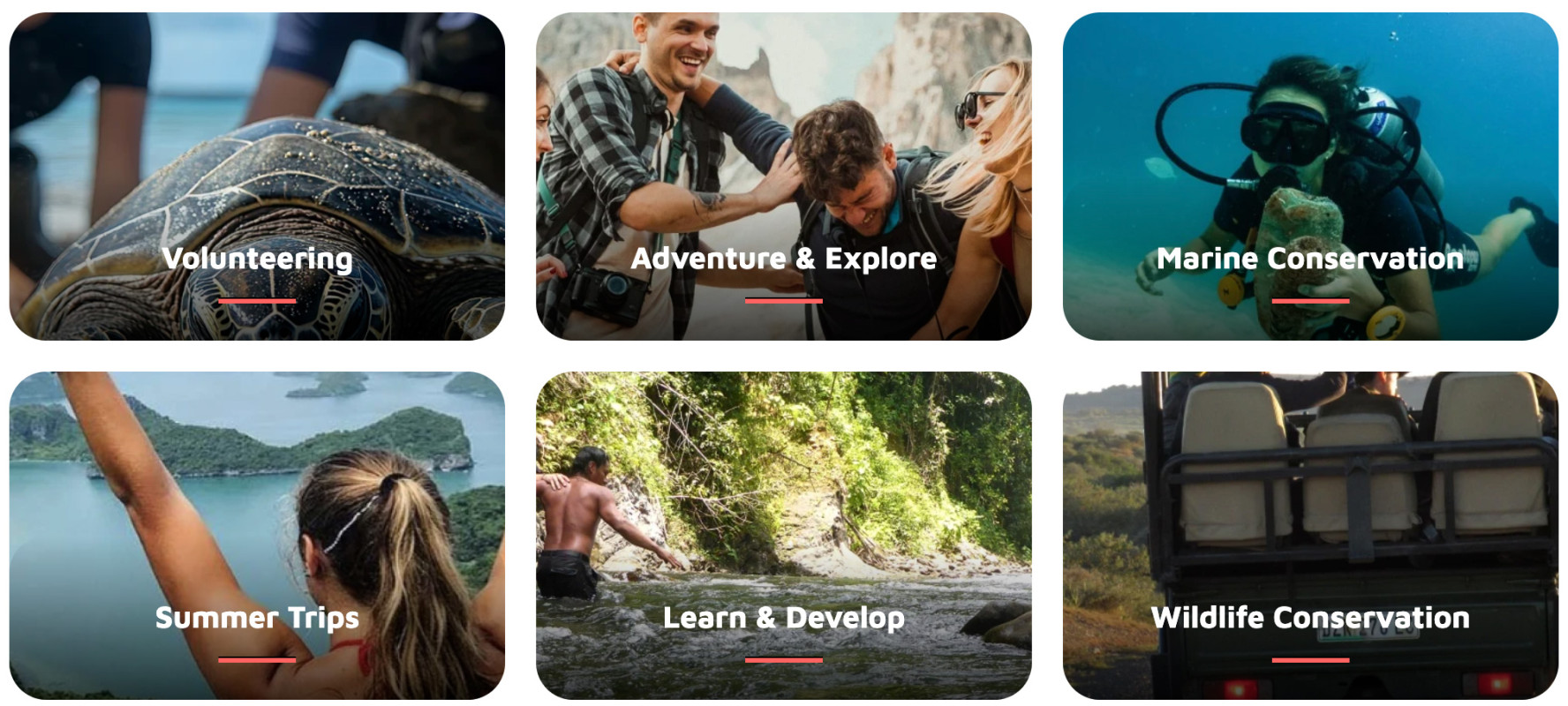
Popular options include:
Group travel adventures
Conservation projects
Training courses
Internships and work experience
Where do I want to go?
Some people choose the destination first. Others choose the experience.
Either way, your options are wide open – such as: marine conservation in Thailand to expedition training in Costa Rica, wildlife work in South Africa.
Marine Conservation in Thailand
Expedition Leader Training in Costa Rica
Adventure travel and wildlife volunteering in South America
Community volunteering in Cambodia
Work and travel in Australia
Wildlife work in South Africa
How much will it cost?
Planning your budget early makes everything easier.
Structured programs often include accommodation, food and activities upfront, making costs more predictable.
As a rough guide, an 8-week programme averages around £3,500, excluding flights and insurance.
Once you know your target, you can then set about fundraising, usually a combination of the following:
Find a part time or summer job
Organise fundraising activities
Apply for grants
Things to Consider
Sustainable travel
More travellers are choosing programs that support local communities and protect the environment.
Wellbeing
Outdoor, active experiences can have a huge impact on both mental and physical health.
Health & Safety
Choosing a structured provider means proper planning, risk management and support throughout your trip.
What Next?
There’s no single way to do a gap year – just the way that’s right for you.
Whether you’re looking to travel, gain experience or try something completely new, the key is to make it count.
Explore your options, ask questions, and start building a gap year you’ll actually remember. Get in touch or explore our trips further by clicking below:



 Follow us